
Resources to take only data, leave only footprints.
A Stamp Asset Pack and Other Non-Intrusive Scientific Collections

Today’s post won’t be as big as interviewing archaeologist through games, but I wanted to share a bit about some collecting I do, both as a tabletop guy and as a scientist. I also wanted to highlight hobbies that are easy to jump into and experiment with yourself.
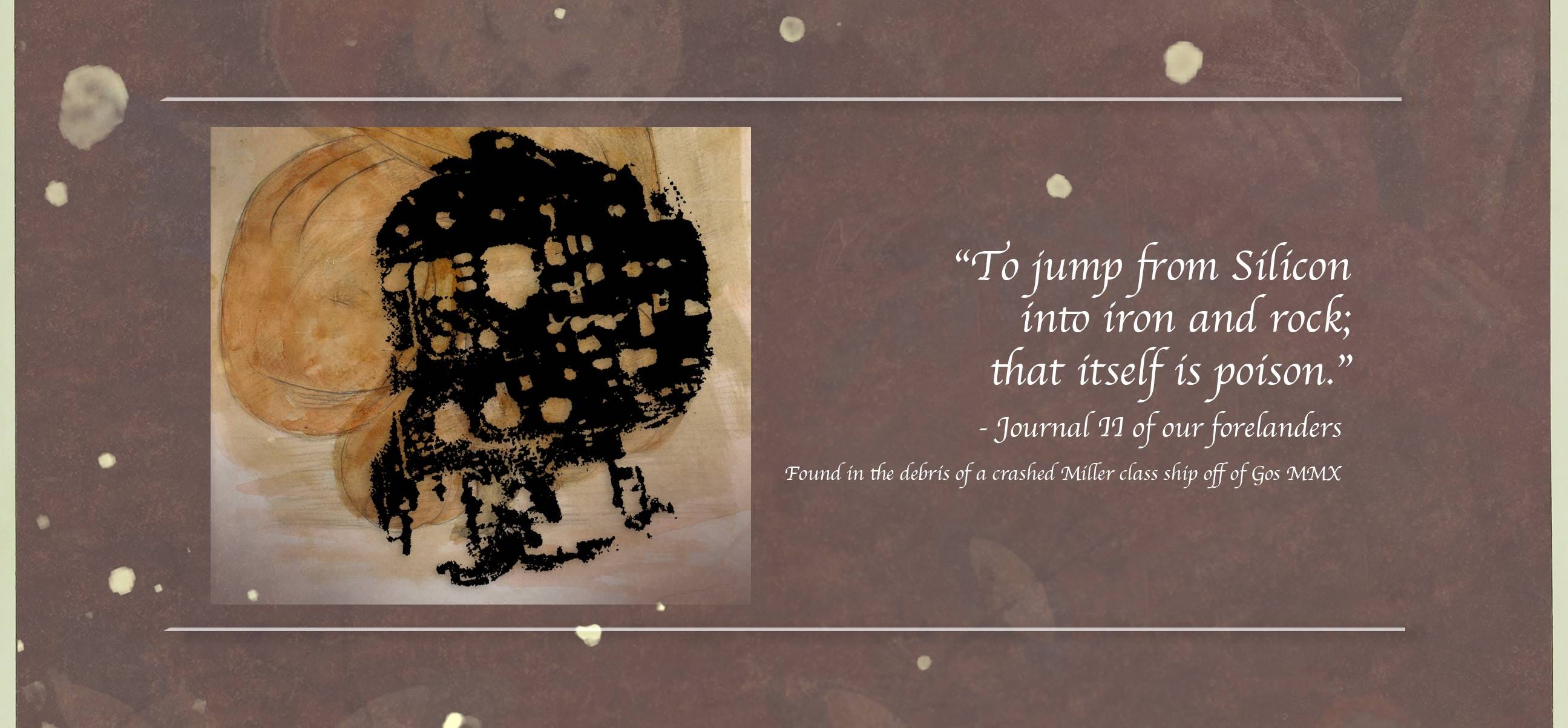
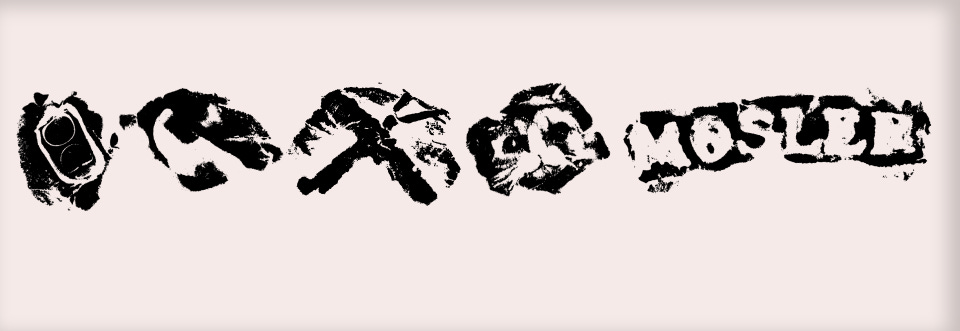
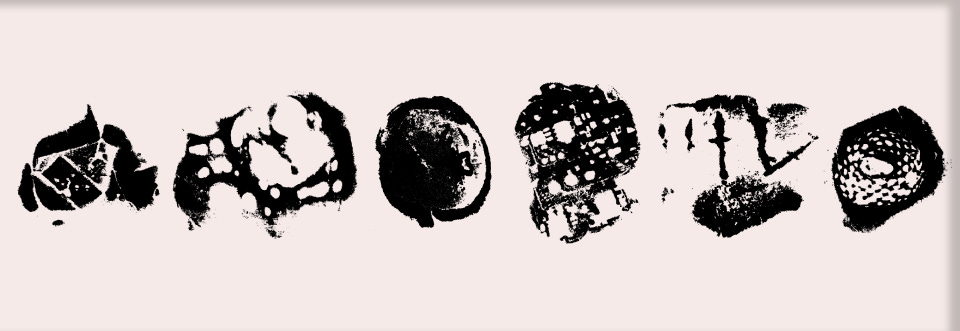
I recently published Jersey Stamps over on Itch; It’s a collection of high resolution scans of stamps I made from textures I found from around the state. The process is simple. You take a kneaded eraser, press it into something with texture, ink it using a pad (even the cheap ones work perfectly), then stamp it onto paper and scan it. Add a little threshold editing on Photopea (a free photoshop alternative) for cleanup and repeat these steps across New Jersey and you get Jersey Stamps.
This has been a really fun way to engage more closely with physical textures as I travel about. It helped me feel more observant, and I came away with a non intrusive souvenir and a resource for future tabletop designs.
The 22 stamps are now available for use in your games or in anything else, and I would love to hear from you if you end up making something with them, or if you create your own!
iNaturalist & Photography
When it comes to recording the environment, photography is a known classic way to connect with places, but it can also serve a huge scientific purpose.
iNaturalist is a free, global online community science app for anyone to record, share, and identify observations of plants, animals, fungi, and other organisms. Any identifications that reach enough of a consensus contribute valuable biodiversity data for science and conservation.
I’m nearly religious about this work, and I often bring it into my Biology classes as a way to get students further involved in their environment. You can create and join projects with other participants, and really take the time to get to know your local organisms.
Through this, you may end up identifying a species that doesn’t have quite a lot of media freely-available online. When appropriate, and when the identification is highly reliable and carefully fact checked, I contribute photos of what I find to Wikimedia Commons. On rare occasion, your image can actually end up going from there to helping a scientific journal communicate research about your creature.
This goes for more than just wildlife as well. If you ever find yourself somewhere not a lot of people get to go, there can be plenty of potential to get resources in some shape or form for people to freely use and to learn from.
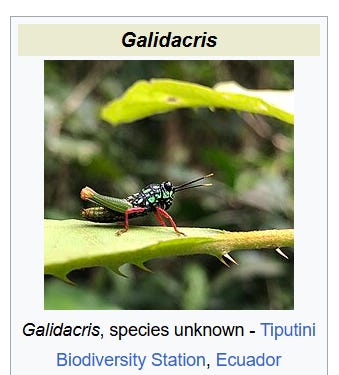
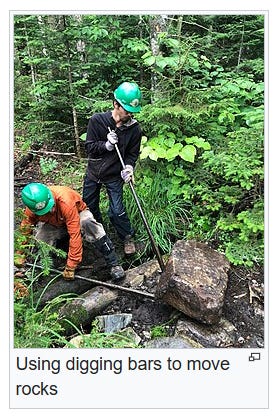
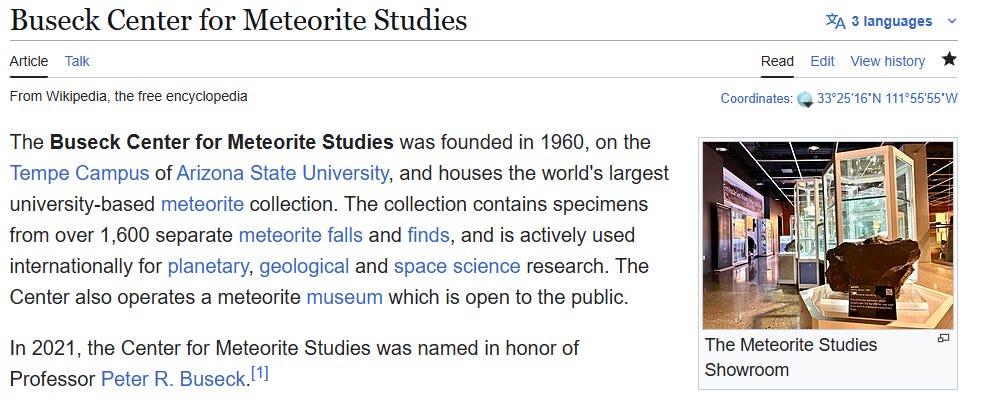
While I do sometimes work with bulky cameras, most of the photos that end up being most useful are taken on the fly with a phone. These days, the image quality is usually more than enough.
Field Recording
The sounds of fledgling starlings in our vent and paneer bhurji being prepped.
Utilizing a Zoom H1essential, it’s been extremely satisfying birding both in and out of the house.
The starlings in the video above all ended up alright (acknowledging they’re invasive, but I’m not a monster). The audio was recorded just before we realized they had fallen into part of the vent that leads to the outside and needed to be rescued.
I have been using this audio-recorder for birding, for listening to different layers of a cityscape from places like hotel rooftops (that microphone has crazy-good directional hearing), and as a solid audio setup for at home movies. Taking field recordings gives you great audio for relevant projects, and it also feels like listening to a film’s sound design as you point the microphone around a space.
Alongside this, although I have not used this specific device for it yet (just a phone), some of the wildlife pages I have edited on Wikipedia now include audio to accompany specific calls we were studying. Sound is a very underutilized form of documentation on these pages, and there is a lot of opportunity to expand how people connect with them.
3D Scans
This one is less of a personal hobby for me, though I have used it from time to time to capture dissections from anatomy classes so students can keep a record. I do have family members who regularly 3D scan sites we travel through. Their recommendation is to use a phone camera to record video, since it stays reliable even when specific apps fail, and then upload that footage to Luma3D for processing. I’ve also thought about using it to capture old apartments before moving out, so we can revisit and walk through those spaces later.
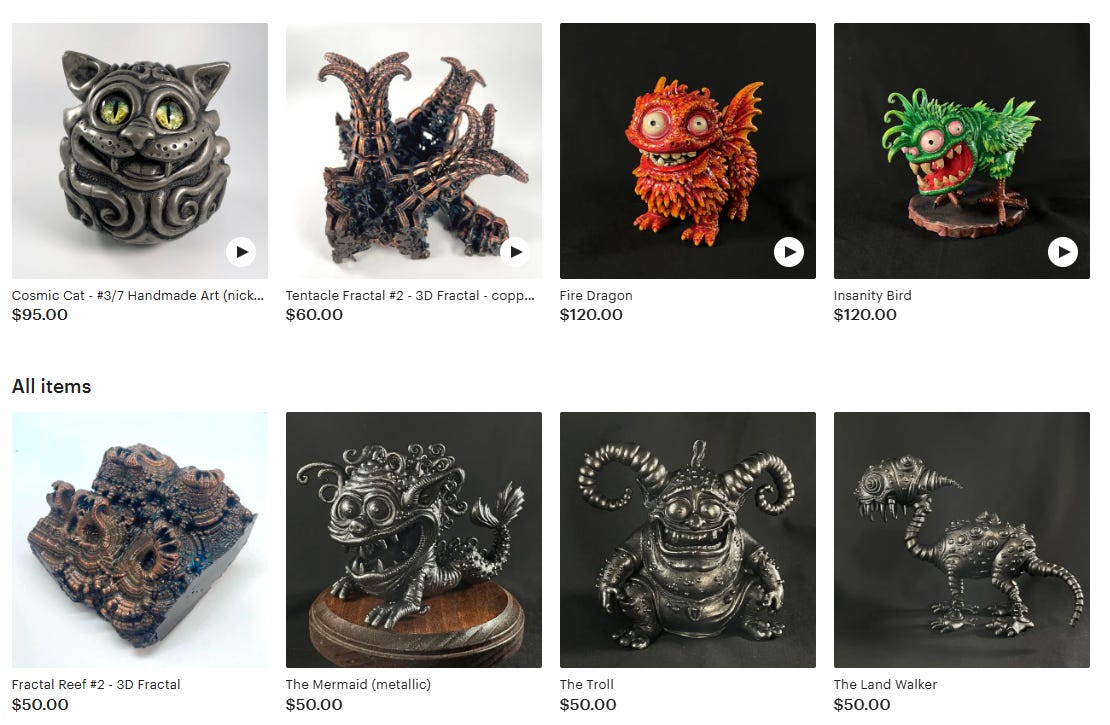
I want to encourage you to check out my family’s shop, which features some sculptures originally sculpted in polymer clay, then molded and resin cast using metal coated silicone molds. The process also occasionally draws on 3D scanning, 3D printing, VR-based molding, hand finishing, and electroplating.
As shown in the video above, these tools also have clear scientific and educational value, and they also lend themselves well to TTRPG props, worldbuilding, and other creative projects.
Plant Sounds
I’ve written about my time at the Mushroom Church in another post, but I wanted to link again to a great guide on measuring bioresistance in plants and mushrooms and sonifying it into music! This guide will help you cheaply get some cables that let you plug-and-play into nature, in a minimally intrusive way.

Them’s how I spend my free time! If you are interested in more science-oriented posts, check out my other Substack The Holistic Scientist. I hope you enjoy these collections, and don’t forget to check out Jersey Stamps for your TTRPG and zine iconography needs.